The Ancient Leadership Warning We Still Need Today
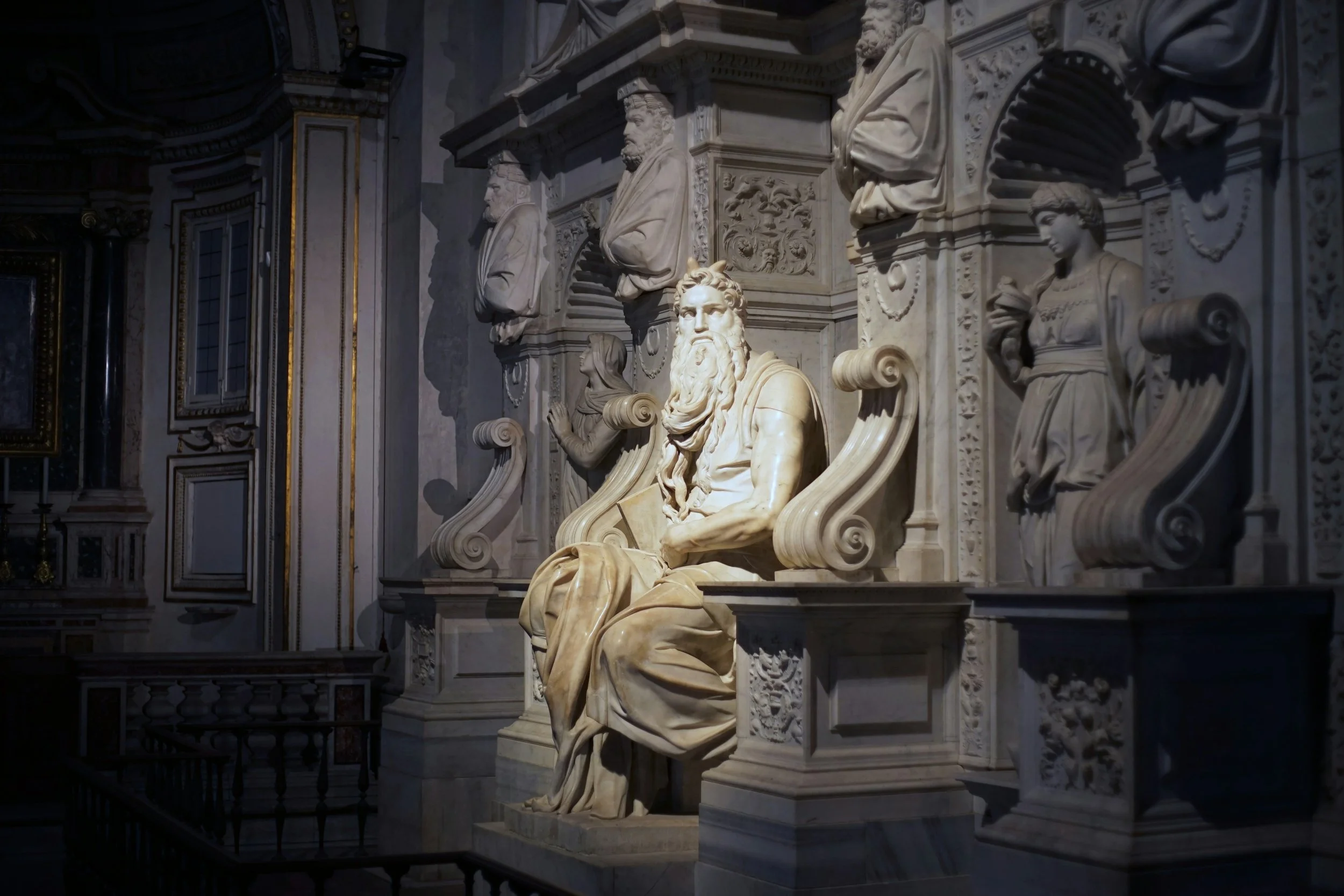
Photo by Fr. Barry Braum on Unsplash, Michelangelo’s famous marble statue of Moses (Rome, Italy)
One of the most fascinating leadership texts I have encountered is nearly 3,500 years old. Buried in an ancient section of Deuteronomy (in the Bible) is a description of what a national leader should and should not become. While the context is obviously ancient, the insights feel startlingly modern. The passage warns leaders not to accumulate excessive power, wealth, status symbols, or personal indulgences. It tells them to remain grounded, connected to ordinary people, disciplined in character, and continually shaped by moral truth.
At its core, the text recognizes something humanity still struggles with: Power changes people. Or perhaps more accurately: power reveals and amplifies what is already happening inside people. History repeatedly shows that leadership failure is rarely caused by lack of intelligence or competence. More often, leaders drift because success slowly distorts their perspective. Influence can create insulation. Authority can weaken self-awareness. Status can inflate ego. Achievement can quietly erode humility. And when that happens, leaders often begin building systems that protect themselves rather than serve others.
The Real Danger of Leadership
One of the striking features of this ancient passage is that it does not primarily focus on a leader’s talent. It focuses on the leader’s appetites. The warning is not against leadership itself. It is against excess. Excessive accumulation. Excessive self-protection. Excessive ego. Excessive dependence on status, wealth, control, or image. The text recognizes that when leaders stop governing themselves, they eventually stop leading others well.
This remains deeply relevant today. Many leadership cultures reward visibility, performance, confidence, expansion, and personal branding. But external success can mask internal erosion for a very long time. A person can become highly effective while becoming increasingly unhealthy. That is why some of the most dangerous leadership failures happen after periods of great success.
Healthy Leaders Stay Grounded
Perhaps the most profound idea in the passage is the insistence that leaders should not see themselves as above other people. That sounds obvious. But leadership environments often move in the opposite direction. Titles, influence, expertise, and public recognition can slowly create emotional distance between leaders and the people they lead. The healthiest leaders resist this drift. They remain teachable. Accessible. Self-aware. Open to correction. Connected to ordinary realities. They do not confuse authority with superiority. In fact, one of the clearest signs of leadership maturity is the ability to assume significant responsibility without developing an inflated sense of self.
Leadership Requires Inner Formation
The ancient text also required leaders to continually immerse themselves in moral and ethical reflection. In modern terms, the principle is simple: leaders need practices that keep them grounded internally. Without intentional reflection, ambition and pressure tend to take over. Healthy leaders cultivate rhythms that restore perspective:
reflection,
learning,
honest feedback,
accountability,
solitude,
meaningful relationships,
and continual examination of motive and character.
Because leadership is never only about competence. It is also about formation. The question is not simply: “Can this person lead?” The deeper question is: “Who and what is this person becoming while they lead?”
A Final Thought
The older I get, the more convinced I become that the greatest challenge of leadership is not managing organizations, teams, or vision. It is managing oneself. Can a person carry influence without becoming consumed by it? Can they remain grounded while succeeding? Can they maintain humility while receiving recognition? Can they continue serving rather than needing to be served? The ancient writers understood something we still need to remember: The greatest threat to leadership is often not weakness. It is unchecked power combined with an unexamined heart.
The biblical passage is provided below.
Deuteronomy 17:14-20
14 “When you enter the land the Lord your God is giving you, take possession of it, live in it, and say, ‘I will set a king over me like all the nations around me,’ 15 you are to appoint over you the king the Lord your God chooses. Appoint a king from your brothers. You are not to set a foreigner over you, or one who is not of your people. 16 However, he must not acquire many horses for himself or send the people back to Egypt to acquire many horses, for the Lord has told you, ‘You are never to go back that way again.’ 17 He must not acquire many wives for himself so that his heart won’t go astray. He must not acquire very large amounts of silver and gold for himself. 18 When he is seated on his royal throne, he is to write a copy of this instruction for himself on a scroll in the presence of the Levitical priests. 19 It is to remain with him, and he is to read from it all the days of his life, so that he may learn to fear the Lord his God, to observe all the words of this instruction, and to do these statutes. 20 Then his heart will not be exalted above his countrymen, he will not turn from this command to the right or the left, and he and his sons will continue reigning many years in Israel.

Thanks for stopping by!
I hope this content was helpful and encouraged you in your daily practice of leadership. If you would enjoy receiving more content like this on a regular basis please subscribe by clicking the button below.